
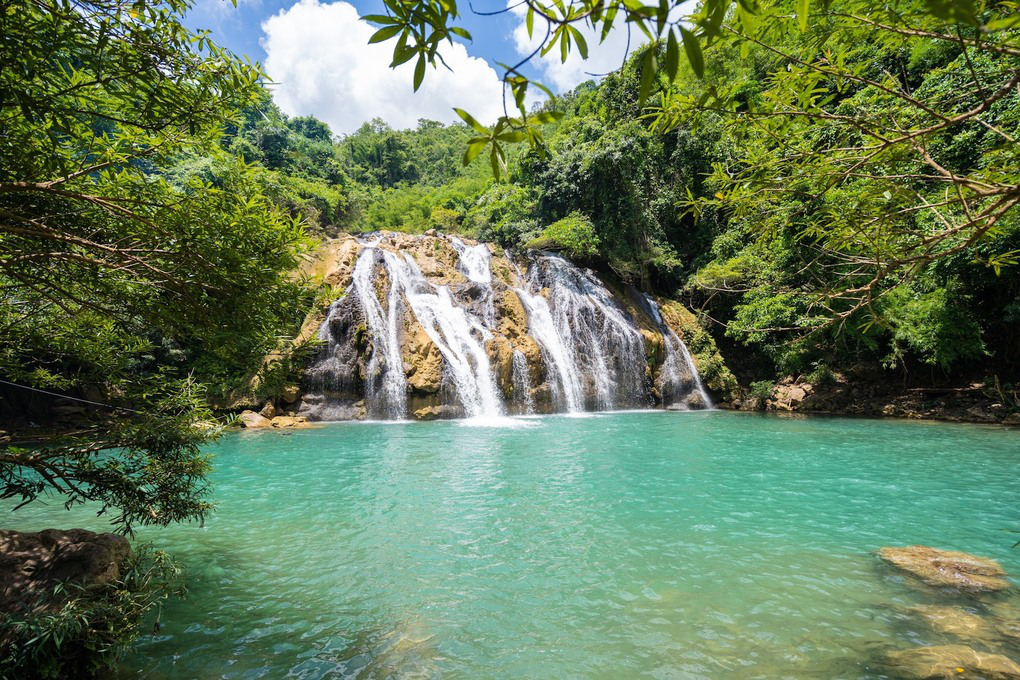
The site in Huong Lap Commune, featuring a three-tiered waterfall, attracts around 3,000 annual visitors managed by a local tourism group. While providing simple accommodations and traditional cuisine, operations are limited to a few months due to weather disruptions and accessibility challenges. Residents earn approximately VND4 million monthly, struggling for economic stability.
Located in Huong Lap Commune within a primary forest, the site remains largely untouched and is accessible via a journey of more than two hours from Dong Hoi, following the North-South Expressway and the western branch of the Ho Chi Minh Road.
The waterfall features three distinct tiers. The upper cascade rises approximately 30-35 meters, followed by a mid-level fall and a lower section of around 10 meters, which serves as the main area for visitors, according to survey data from the British Cave Research Association. The lowest tier opens into a natural pool suitable for water activities, while its flowing white streams are locally likened to the hair of Van Kieu women.

For several years, a community tourism group formed by local households has managed the site, attracting around 3,000 visitors annually, according to group head Ho Van Gioi. Visitors can stay in simple bamboo shelters, enjoy views of the surrounding forest, and experience traditional cuisine prepared by Van Kieu residents, including grilled chicken, forest vegetables, and sticky rice.
Tourism at the site remains highly seasonal, typically operating for only two to five months each year. Extreme weather events, such as storms in June 2025, have disrupted operations and damaged infrastructure. Accessibility also remains a major challenge, as trails to the site are frequently affected by heavy rainfall. Limited funding and a lack of formal training continue to constrain further development.
The community group, comprising 16 households, operates on a shared-profit model. During the peak season, each household earns an average of about VND4 million (approximately US$152) per month, a level residents say is still insufficient to ensure long-term economic stability.

