
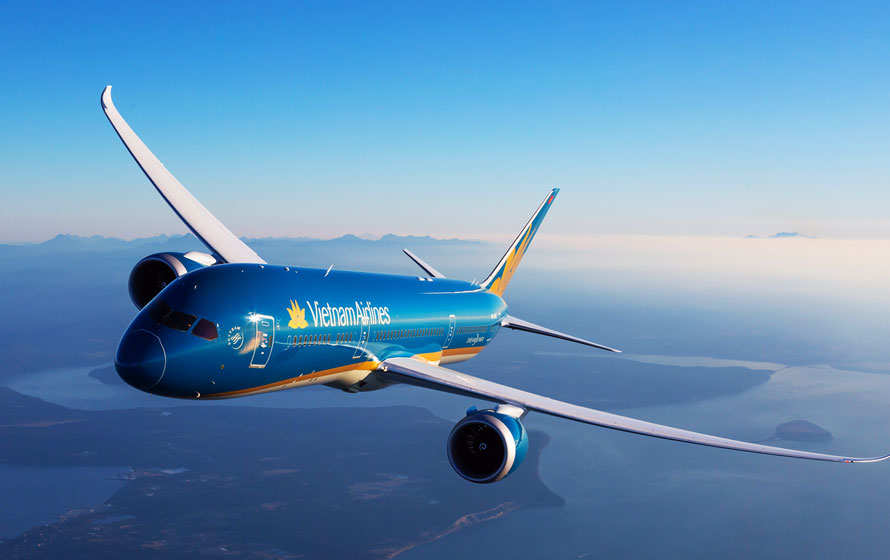
Vietnamese airlines are preparing to adjust their flight networks from April as rising Jet A1 fuel costs and tightening supply begin to impact operations.
The Civil Aviation Authority of Vietnam stated that while carriers are currently maintaining their winter schedules, fuel availability is only guaranteed until mid-April. This has prompted airlines to reassess capacity and balance operational needs with financial sustainability.
Vietnam Airlines has announced a series of route suspensions starting April 1, including services from Cat Bi to Buon Ma Thuot, Cam Ranh, Phu Quoc, and Can Tho, as well as routes connecting Ho Chi Minh City with Van Don, Rach Gia, and Dien Bien. Depending on fuel price fluctuations, the airline may reduce 700 to 1,700 round trips per month in the second quarter, equivalent to 10-20 percent of its total schedule. International routes could see cuts of 4-18 percent, while domestic services may decline by 12-26 percent.
Low-cost carrier Vietjet Air is also scaling back, with an overall capacity reduction of 18 percent in April. This includes a 22 percent decrease on domestic routes and 11 percent on international services. Adjustments include reduced frequencies on key routes such as Hanoi-Cam Ranh, Hanoi-Buon Ma Thuot, Ho Chi Minh City-Cat Bi, and Ho Chi Minh City-Tho Xuan, alongside cuts to international routes including Da Nang-Singapore and Ho Chi Minh City-Bangkok.
Bamboo Airways expects to reduce its operations to approximately 15-17 flights per day, focusing on core trunk routes and services linked to Quy Nhon. Meanwhile, Sun PhuQuoc Airways plans to maintain around 60 daily flights through April, with potential adjustments in the following months.
Vietravel Airlines will continue operating 12-14 daily flights with its current fleet, with plans to expand to 28-30 flights should conditions stabilize. Pacific Airlines is expected to cut 8-30 percent of its capacity in the second quarter, primarily targeting off-peak periods.
The current situation is linked to broader geopolitical tensions in the Middle East, where disruptions involving the U.S., Israel, and Iran – alongside the closure of the Strait of Hormuz, a key route for approximately 20 percent of global oil and liquefied natural gas supply – have affected global energy flows and fuel availability.
Vietnam remains heavily dependent on imported Jet A1 fuel, with only around 20 percent supplied domestically and the remainder sourced from markets such as China, Thailand, and Singapore. Local suppliers, including Skypec and Petrolimex Aviation, are exploring alternative sources from Japan and Russia, though no agreements have been finalized.
Fuel providers have committed to meeting demand until mid-April. Beyond this point, airlines may need to rely on spot fuel purchases at significantly higher prices, further intensifying operational pressures across the industry.
 Australian Hospitality Alumni Network Vietnam