
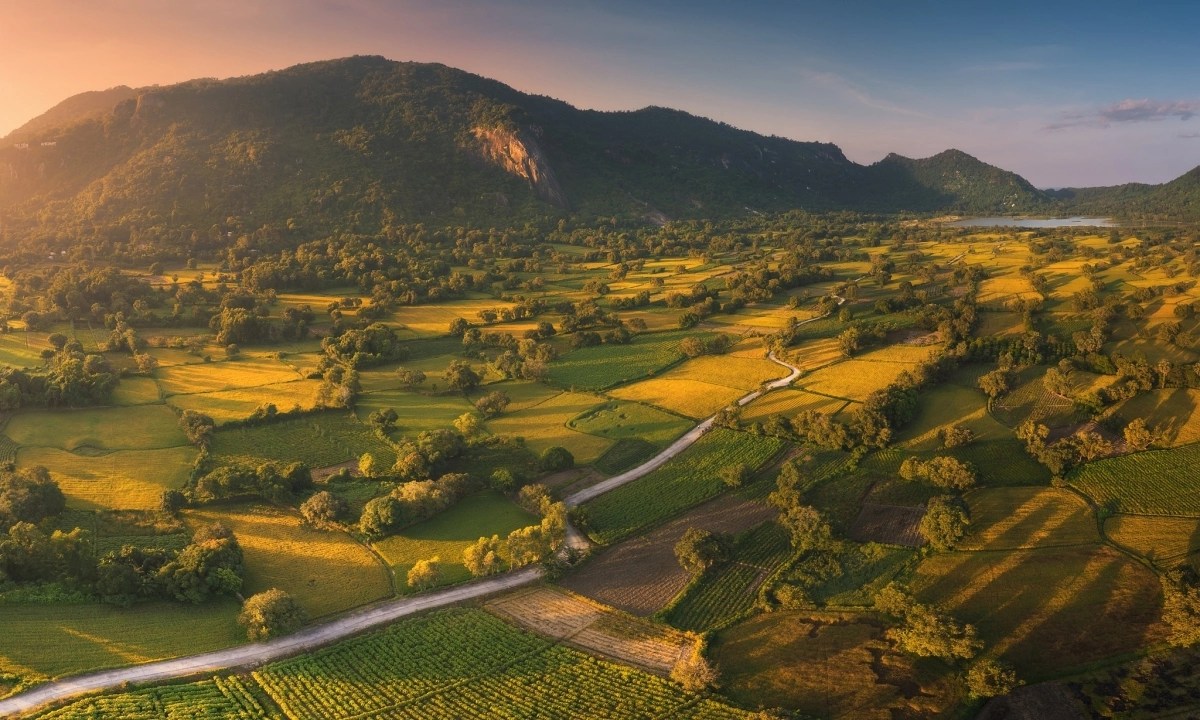
As harvest season arrives, Ta Pa Valley in southern Vietnam transforms into a golden landscape, marked by rice fields, sugar palms, and Khmer temples. Photographer Cao Ky Nhan captures its beauty as rice ripens earlier this year, reflecting the valley’s changing scenery and the rich cultural heritage intertwined with farming practices of the local Khmer community.
Located in Tri Ton District, An Giang Province, Ta Pa lies within the Bay Nui (Seven Mountains) region. Unlike the flat expanses typical of the Mekong Delta, the area forms a low basin between Ta Pa and Co To mountains, creating a rare valley landscape shaped by both mountains and rice paddies.
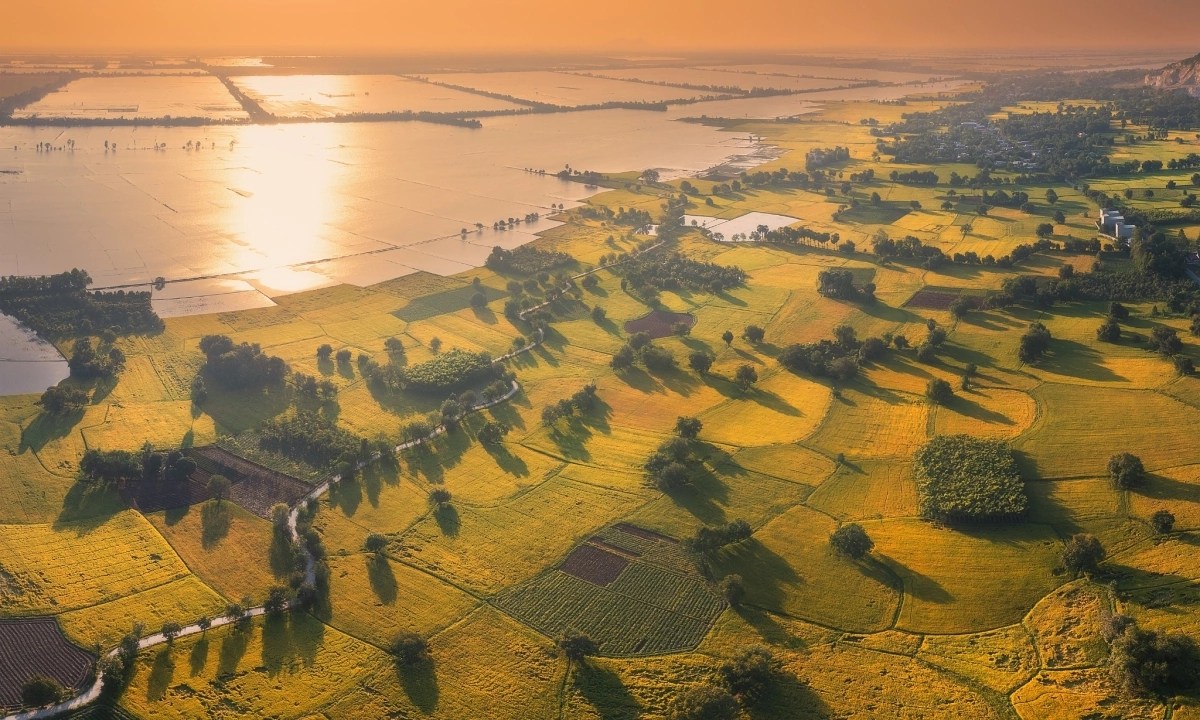
In late November, Saigon-based photographer Cao Ky Nhan returned to Ta Pa for the fourth time to document the harvest season. This year, the autumn-winter rice crop ripened earlier than usual.
“The scenery changes every year, and the light always brings new surprises,” Nhan said. “No two visits are ever the same.”
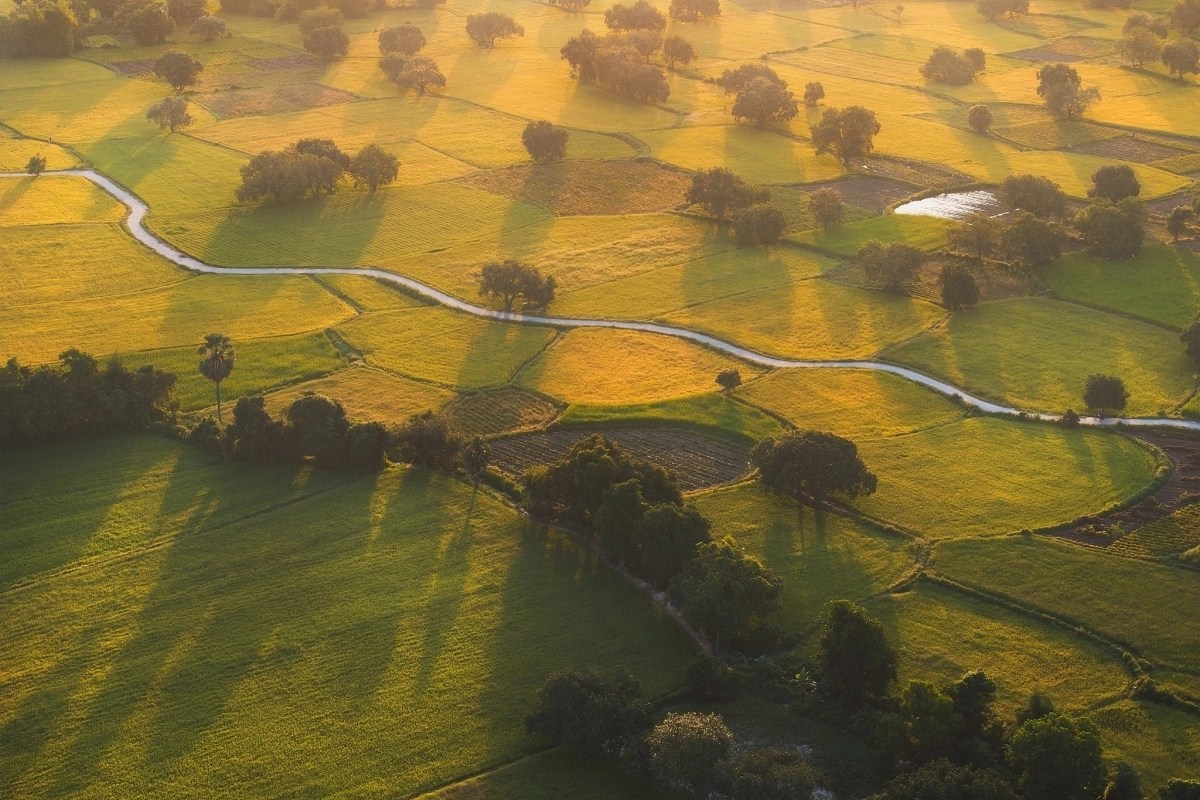
Ta Pa’s landscape is defined by a gentle interplay of rice fields, sugar palms, cajeput trees, and rolling hills. Across the year, the valley shifts from flooded fields to golden paddies, then to bare land after the harvest – each phase carrying its own quiet beauty.
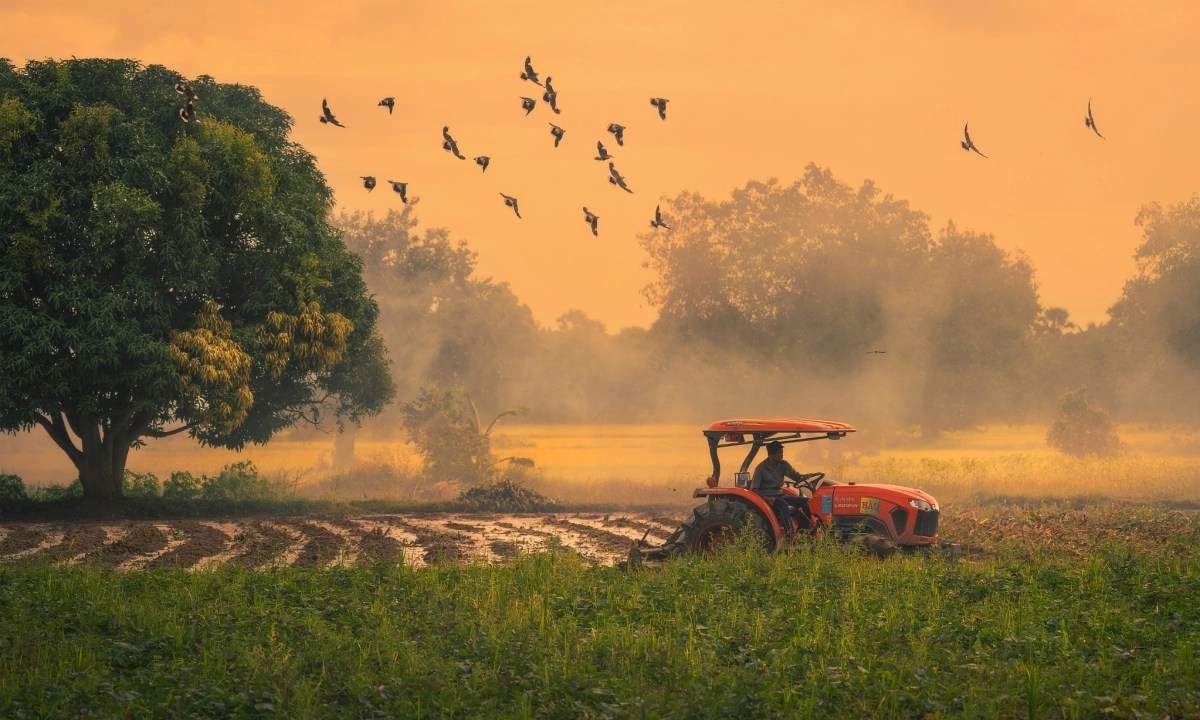
According to Nhan, this year’s rice matured in mid-November, rather than early December as in previous seasons. Farmers responded by accelerating the harvest through van cong, a long-standing practice in which neighbors take turns helping one another reap the fields as the rice ripens. By the end of November, many paddies had already been cleared.
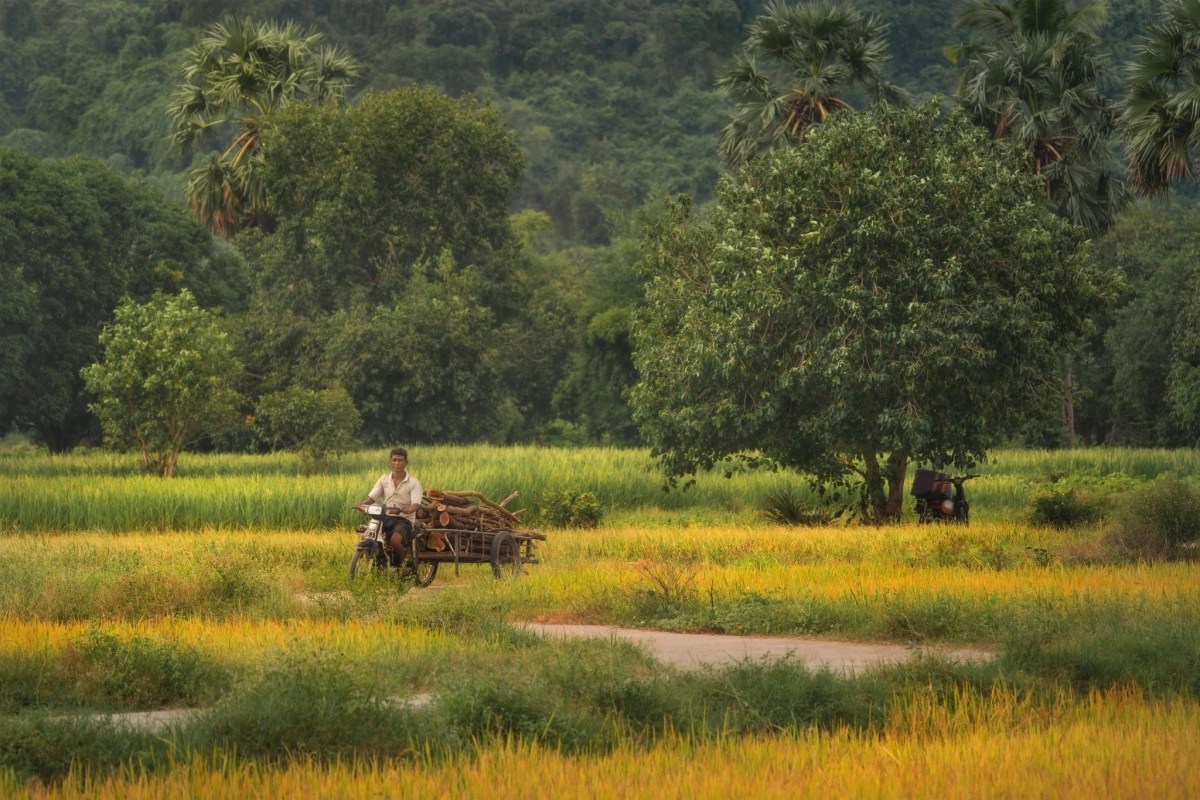
Access roads to the valley between Ta Pa and Co To mountains are available but narrow and steep in some sections. For photographers, the most favorable light appears between 5:00 a.m. and 6:30 a.m., when the rising sun illuminates the fields and farmers begin their work. Late afternoons, from around 4:00 p.m., offer soft light for sunset views.
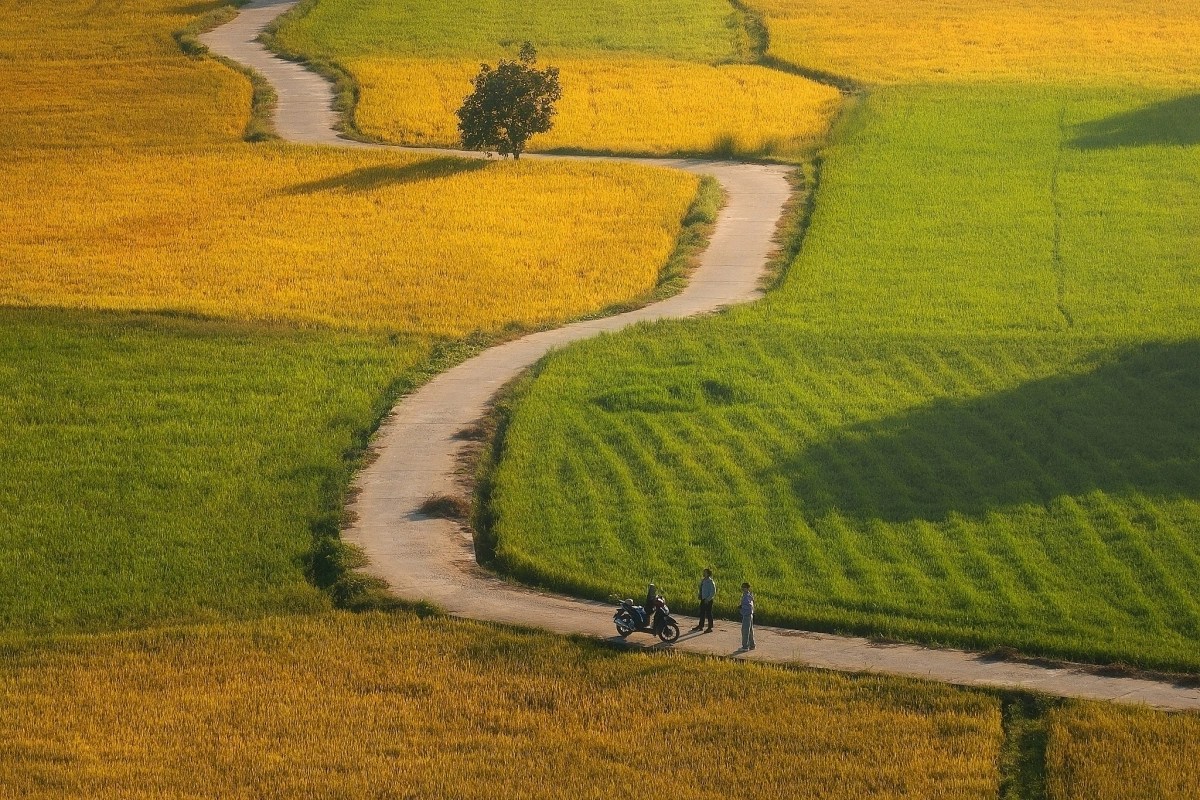
Having photographed rice seasons across Vietnam, including Mu Cang Chai in Lao Cai Province and Phong Nam in Cao Bang Province, Nhan finds Ta Pa distinct from the northern mountains. Its golden season, he says, feels gentler and more poetic.

His favorite moment is early morning, when the fields glow a deep gold, as if “coated in honey.” It is a time when both landscape and observer seem to awaken, and the valley changes almost imperceptibly with the light.
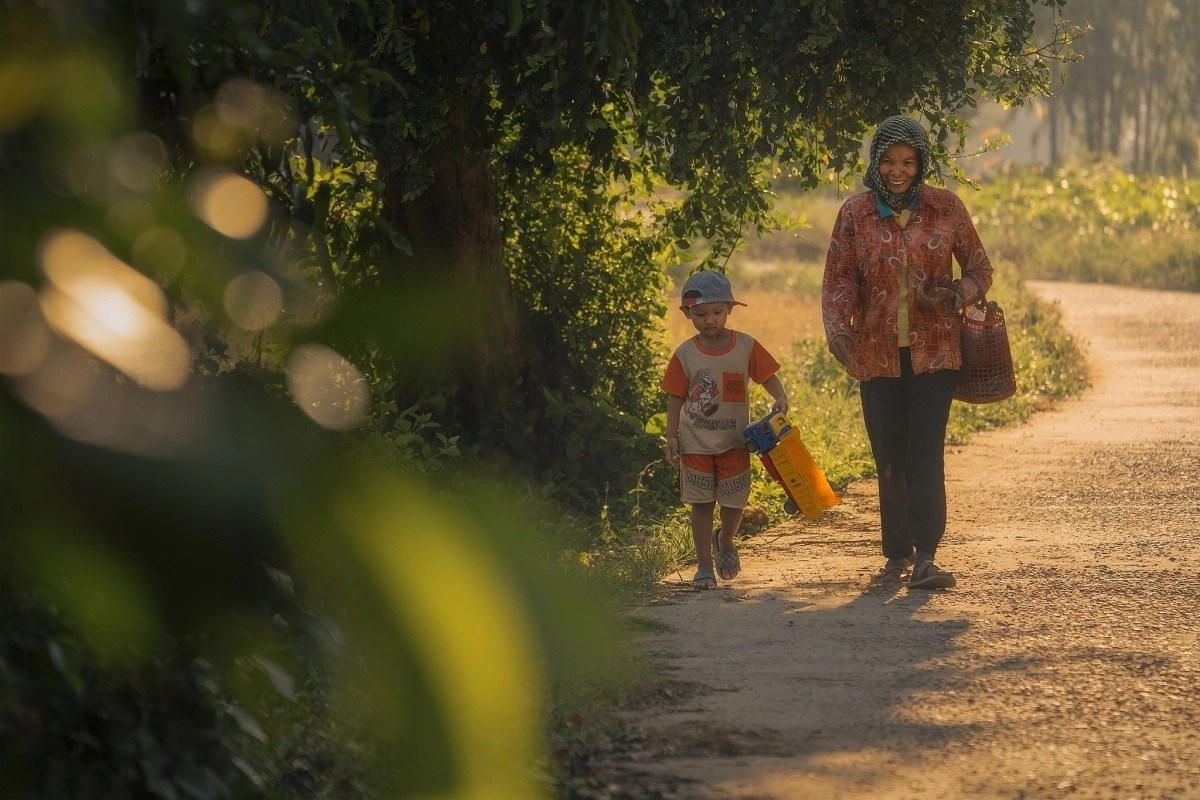
Ta Pa is home to a long-established Khmer community, whose culture is deeply woven into farming practices and daily life.

Sugar palms, cajeput trees, and centuries-old temples shape the area’s identity. This year is particularly unusual, as the rice harvest coincides with the annual flood season, adding another layer of contrast to the scenery.

Visitors can also explore Khmer cultural heritage at temples surrounding the valley, including Soai So Pagoda, an old Theravada Buddhist temple. Both a spiritual landmark and a popular stop in the Bay Nui region, the pagoda offers insight into the enduring religious and cultural life of the local community.
 Australian Hospitality Alumni Network Vietnam