
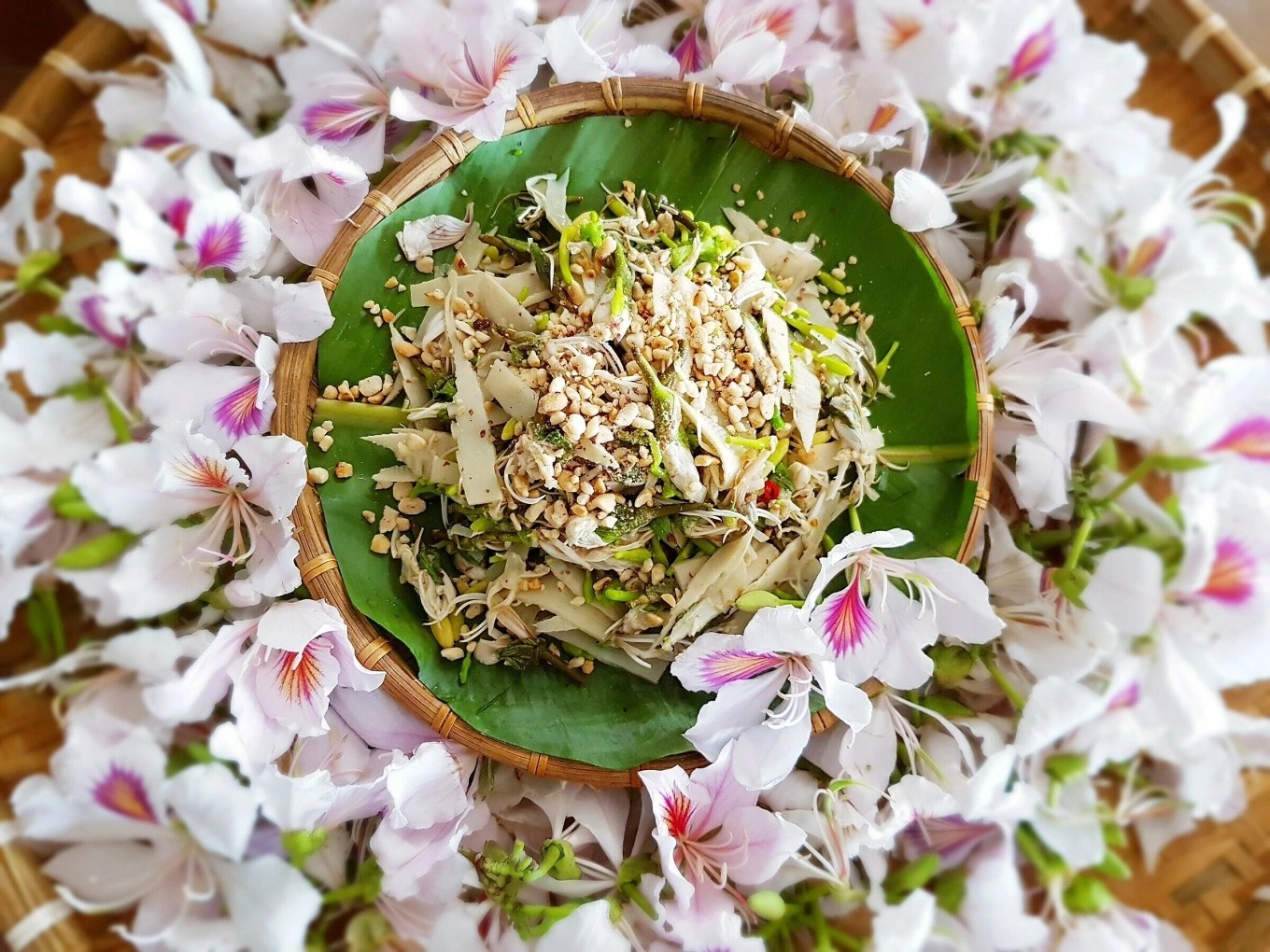
A Dish That Appears Once a Year
Ban flower salad is a seasonal specialty of the Thai ethnic community in Vietnam’s northwest, known for its rare balance of sour, spicy, bitter, sweet, and nutty flavors. The dish is prepared only once a year, when ban flowers bloom across mountain forests in late February of the lunar calendar. Its brief appearance makes it not just a meal, but a moment that marks the changing of seasons.
The Flower of the Mountains
Ban flowers, scientifically known as Bauhinia variegata, are a cultural symbol of the northwest. They bloom after peach and plum blossoms fade, signaling the end of winter and the beginning of a new agricultural cycle. For local communities, the flower represents renewal and harmony with nature, values that are deeply woven into everyday life.
Simple Ingredients, Careful Craft
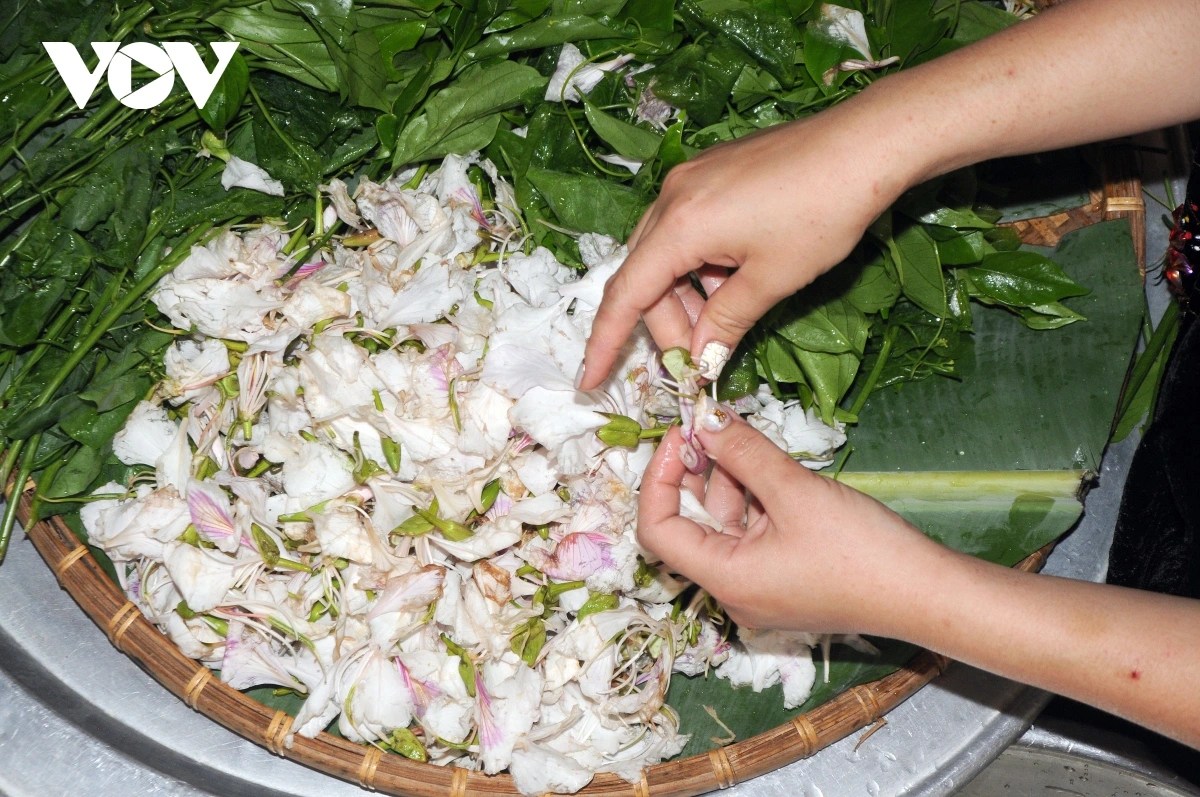
Although ban flower salad appears simple, achieving its signature flavor requires experience and restraint. The flowers are carefully cleaned and briefly boiled to remove bitterness while preserving their delicate aroma. They are then mixed with traditional ingredients such as ginger, galangal, young garlic, fresh herbs, and mắc khén, a distinctive forest spice central to Thai cuisine. In some areas, young pumpkin shoots or chayote leaves are added to enrich texture and fragrance.
Letting the Flavors Speak
After mixing, the salad is left to rest for fifteen to twenty minutes, allowing the ingredients to harmonize. This resting period is essential. It softens sharp notes, deepens aroma, and creates the layered taste that defines the dish. The result is subtle, complex, and unmistakably regional.
A Culinary Marker of Cultural Identity
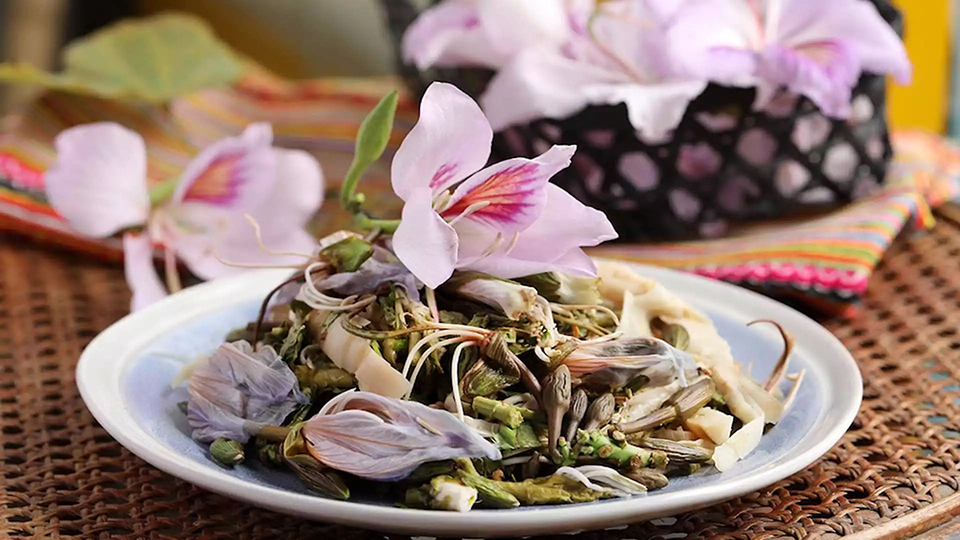
For generations, dishes made from ban flowers have been passed down within Thai households. Today, ban flower salad has found its way onto restaurant menus catering to travelers seeking authentic local cuisine. Because it depends entirely on wild blooms and a short harvest season, the dish has become a culinary marker of northwest Vietnam, carrying with it stories of landscape, tradition, and time.
 Australian Hospitality Alumni Network Vietnam