

With 25 museums currently in operation, Ho Chi Minh City is projected to welcome around four million visitors in 2025, placing growing pressure on cultural institutions to sharpen their identities and enhance service quality.

Speaking at the Citywide Cultural Heritage Conference on November 24 at the Ton Duc Thang Museum, Nguyen Minh Nhut, Deputy Director of the Ho Chi Minh City Department of Culture and Sports, reported that local museums are expected to attract nearly four million visitors by year-end. Of these, about 1.3 million will be international travellers, accounting for roughly one-fifth of all foreign arrivals to the city.
Nhut emphasized that this rising public and tourist interest reflects a positive and noteworthy shift in the role of museums within the city’s cultural landscape.

Strengthening capacity to better serve the public
These outcomes highlight significant efforts by both the museum sector and Ho Chi Minh City’s broader cultural institutions. The city currently hosts 25 museums, including:
- 9 museums under the Ho Chi Minh City Department of Culture and Sports
- 4 museums managed by central ministries and agencies
- 12 private museums
Between 2021 and 2025, the department supported the establishment of eight out of the city’s 12 non-public museums, resulting in a threefold increase in privately operated museums compared with a decade ago.
Nhut expressed his pleasure that museums across the city are increasingly demonstrating their value.
Among the nine museums managed by the department, seven have been recognised as first-tier and two as second-tier, a notable accomplishment, given that Vietnam has only 18 first-tier museums nationwide. All seven are also members of the International Council of Museums (ICOM).
Private museums are likewise becoming more dynamic, hosting exhibitions and themed showcases that contribute to the city’s cultural offerings and attract a broader audience.
Building distinct identities
Dr. Le Thi Minh Ly, former Deputy Director of the Department of Cultural Heritage, noted that Ho Chi Minh City is home to museums with nearly a century of history, such as the Ho Chi Minh City Museum of History. She stressed that a museum’s origin story forms a crucial part of its brand, shaped by its earliest collections and by pioneering French and Vietnamese museologists.
Ly raised an important question: With more than 100 years of history, what should be done now to guide this museum’s development toward 2030, and what strategic vision should inform its trajectory through 2045?
She underscored the need for further investment in research, training, and academic exchange at both domestic and international levels.
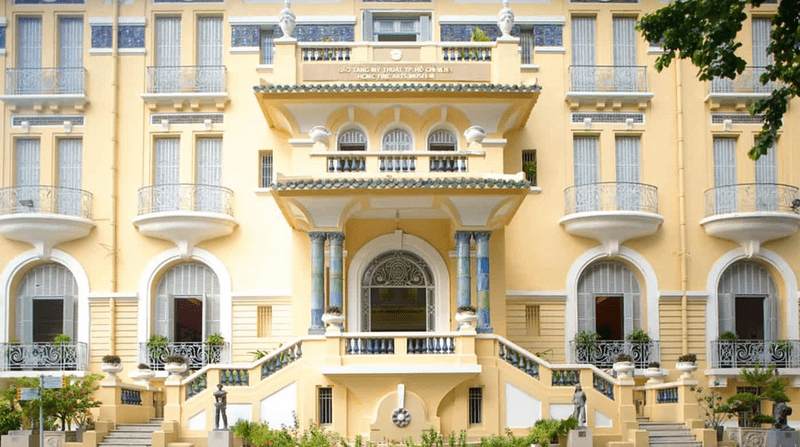
Ly also highlighted the Southern Women’s Museum, the Ho Chi Minh City Museum of Fine Arts, and two commemorative institutions, the Ho Chi Minh Museum and the Ton Duc Thang Museum, all of which are working to leverage internal strengths to serve visitors’ needs for enjoyment, education, and exploration.
Conference delegates expressed hope that the city’s museums will avoid duplication and progressively cultivate distinct identities aligned with three orientations:
- Academic, scholarly, and ideological
- Educational and creative
- Experiential, recreational, and community-based
They also stressed the importance of enhancing digital capabilities to help museums tell compelling stories about the city’s history and culture.
War Remnants Museum: When demand exceeds supply
The War Remnants Museum exemplifies a rising challenge: demand outpacing capacity.
Having operated for 50 years, the museum now welcomes about three million visitors annually, making it one of the most visited museums in Vietnam.
According to Dr. Ly, the museum benefits from a prime location, a highly trained staff, and a steadily expanding audience. She emphasized that, with its mission to preserve historical memory and promote peace, the institution holds significant national and international importance — and that proper investment will allow it to realize its full potential.
 Australian Hospitality Alumni Network Vietnam