
On November 18 in Ninh Binh, the Vietnam National Authority of Tourism (VNAT), in cooperation with the Swiss State Secretariat for Economic Affairs (SECO), convened the International Conference on Sustainable Tourism Development in the Greater Mekong Subregion (GMS). The event served as a key activity alongside the 56th GMS Tourism Working Group (TWG-56) Meeting and related sessions.
A Regional Platform for Shared Solutions
Gathering over 100 delegates from GMS countries, the conference brought together national tourism organizations, associations, enterprises, and international partners including the Pacific Asia Travel Association (PATA) and the Asian Ecotourism Network. Swiss experts, widely recognized for their leadership in sustainable tourism, shared global insights and implementation standards.
Discussions focused on balancing economic growth with social and environmental benefits. The dialogue emphasized replicable sustainability models amid rising climate risks and rapid tourism expansion.

Vietnam Demonstrates Regional Leadership
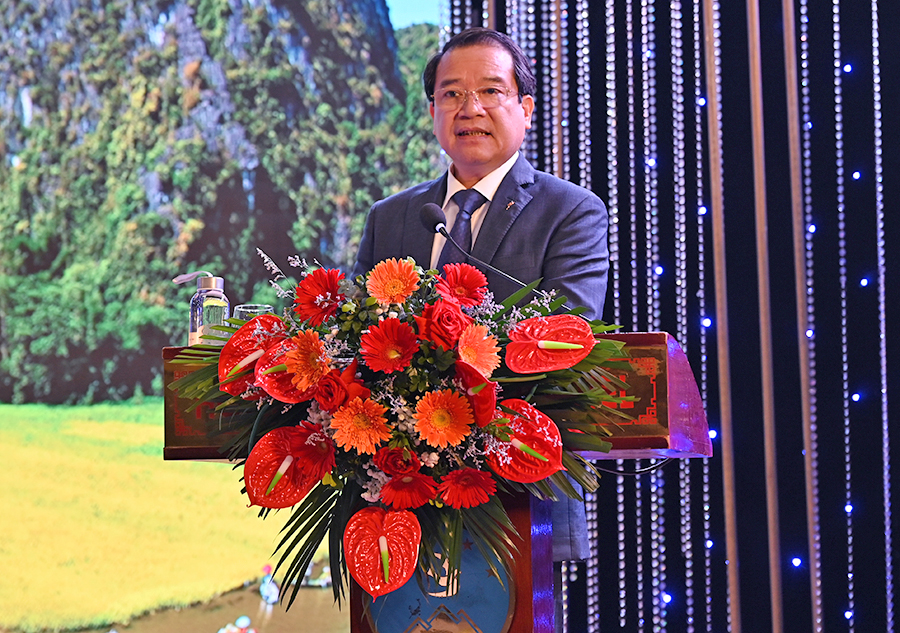
In his opening remarks, VNAT Vice Chairman Ha Van Sieu expressed appreciation for Switzerland’s long-term support through the Swiss Tourism for Sustainable Development in Vietnam Project (ST4SD) and contributions from Helvetas Vietnam and other partners. He highlighted Vietnam’s continued progress as a leading tourism destination in Asia.
Vietnam’s tourism results reflect this leadership. In 2024, the country received accolades from the World Travel Awards for Asia’s Leading Destination and Asia’s Leading Nature Destination. The nation welcomed 17.6 million international visitors in 2024, a 39.5% increase over 2023. In the first 10 months of 2025, arrivals reached 17.2 million, up 21.5% year-on-year, driven by stronger visa policies, government action, and widespread adoption of sustainable practices.
Driving Cooperation Toward the 2030 Strategy
Tourism remains a key force for economic connectivity in the GMS, but the sector faces mounting challenges including climate change, infrastructure pressure, uneven benefit sharing, and growing demand for heritage protection. Vice Chairman Sieu emphasized that the recently approved GMS Tourism Development Strategy to 2030 offers strategic direction for green, responsible, and well-connected growth.
Vietnam presented several proposals to advance the 2030 Strategy, including:
- Establishing a regional action framework based on GSTC standards to position the GMS as a unified, sustainable destination.
- Supporting tourism stakeholders in adopting policies aligned with the UN SDGs and GSTC criteria.
- Working with the Mekong Tourism Coordinating Office (MTCO) to consolidate shared proposals and strengthen joint initiatives.
- Advancing Vietnam’s national green agenda, including reporting to the Government on sustainable tourism mechanisms and progressing toward the national Net Zero 2050 goal. Vietnam also announced it will host the National Green Tourism Forum in December 2025.
Swiss Contributions: Governance, Innovation, Inclusivity
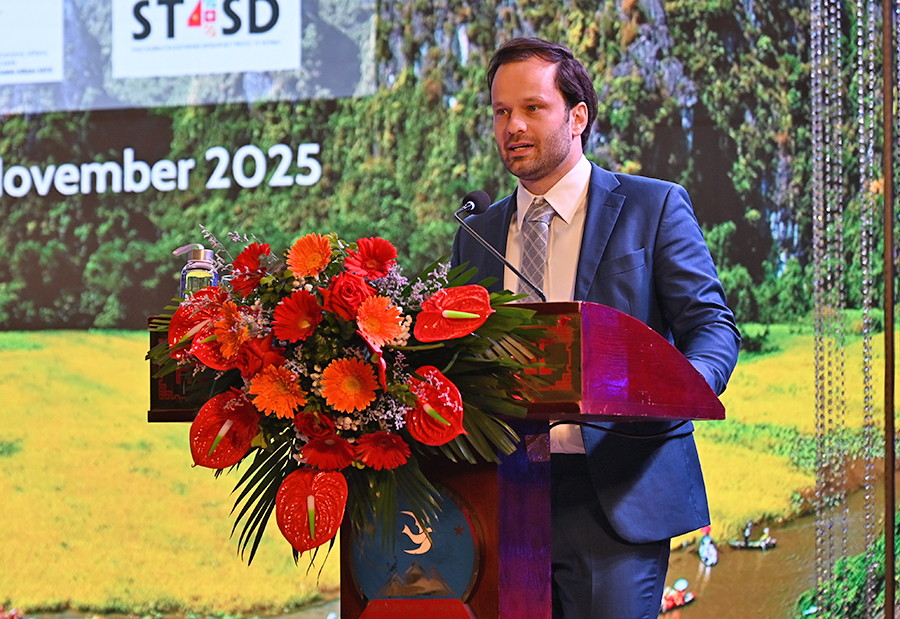
SECO representative Etienne Jenni underscored tourism’s role in protecting heritage and local livelihoods, particularly in rural areas. He cautioned that unmanaged growth risks degrading environmental assets that form the core of destination value.
He highlighted the GMS as a high-potential region facing climate vulnerability and rapid development pressures. Jenni praised Vietnam’s sustainable tourism models, referencing Ninh Binh and community-based tourism practices in Hoi An, where green agriculture, conservation work, and women-led initiatives have delivered tangible results. SECO reaffirmed its commitment to strengthening governance, capacity building, and sustainability standards through the ST4SD project.
Ninh Binh: A Case Study in Responsible Tourism
Ninh Binh Department of Tourism Director Bui Van Manh presented the province’s approach to harmonizing conservation and development. With more than 5,000 historical and cultural sites, Ninh Binh is home to the Trang An Landscape Complex – Southeast Asia’s only mixed UNESCO World Heritage property. The province welcomed 17.5 million visitors in the first ten months of 2025, generating more than VND 19,000 billion in revenue, and continues to earn global recognition from organizations such as Forbes, Booking.com, and the World Travel Awards.
Ninh Binh reaffirmed its commitment to digital transformation, green tourism practices, and the development of a proposed Mekong Heritage Connection Route to strengthen regional linkages.

Pathways to a Shared Sustainable Future
The conference concluded with two thematic discussions. The first focused on international models and cooperation mechanisms for sustainable tourism development. The second addressed the GMS Vision and Action Plan for 2030, clarifying MTCO’s coordinating role and defining concrete measures for implementation.
Delegates closed with consensus on the need for deeper collaboration, harmonized sustainability standards, and continued collective efforts to build a greener future for the GMS tourism industry.

 Australian Hospitality Alumni Network Vietnam