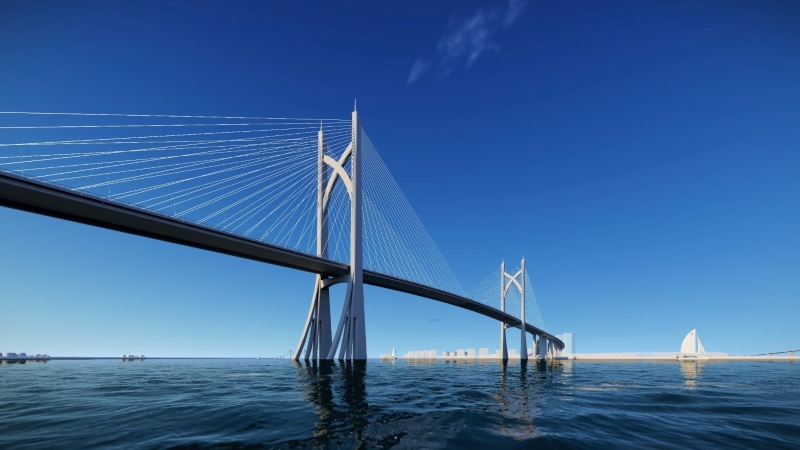
The Ho Chi Minh City People’s Committee has officially authorized Vingroup to prepare a proposal for the Can Gio – Vung Tau sea-crossing route, a major infrastructure initiative expected to strengthen coastal connectivity and drive regional development.
According to a document signed by Vice Chairman Bui Xuan Cuong, the city has approved Vingroup’s request to conduct research and develop a pre-feasibility report for the project under the Public–Private Partnership (PPP) model.
The group will self-finance the study without using the city’s budget, and is required to complete and submit the proposal within 12 months of the approval date. Should the report not receive endorsement from the competent authorities or fail to meet the deadline, the authorization will automatically lapse, and Vingroup will bear all expenses incurred during the research process.
Ho Chi Minh City emphasized that this authorization does not imply a direct appointment of Vingroup as the project’s investor. Once the research phase concludes, the city will conduct an open and transparent selection process to determine the final developer in accordance with Vietnamese law.
During the research process, Vingroup is required to consult with relevant municipal departments—including Construction, Planning and Architecture, Natural Resources and Environment, and Finance—to ensure the proposal aligns with technical standards, environmental requirements, and socio-economic efficiency.
The findings of Vingroup’s study may later be transferred to city authorities for use in subsequent planning and implementation procedures, as necessary.
A Strategic Step Toward Coastal Connectivity
Vingroup earlier noted that following the administrative merger of Ba Ria–Vung Tau into Ho Chi Minh City, the creation of a direct coastal corridor has become increasingly essential. The Can Gio – Vung Tau area holds strategic potential in marine economy, tourism, and eco-urban development, but remains constrained by limited transport infrastructure—currently reliant on ferries and indirect routes.
The proposed sea-crossing route or bridge is expected to significantly reduce travel time, enhance interregional connectivity, and stimulate sustainable growth in trade, tourism, and coastal urbanization.
Can Gio: From Remote Corner to Emerging Gateway
Once considered a remote and isolated district, Can Gio is rapidly transforming into a new gateway and development hub for Ho Chi Minh City. The area is witnessing a surge in strategic infrastructure projects—ranging from the Vinhomes Green Paradise coastal urban development to proposed high-speed rail, highway interchanges, and the Can Gio Bridge.
Together, these projects are expected to redefine the city’s coastal landscape and position Can Gio as a key center for marine economy and sustainable urban growth in the 2025–2030 period.
 Australian Hospitality Alumni Network Vietnam