
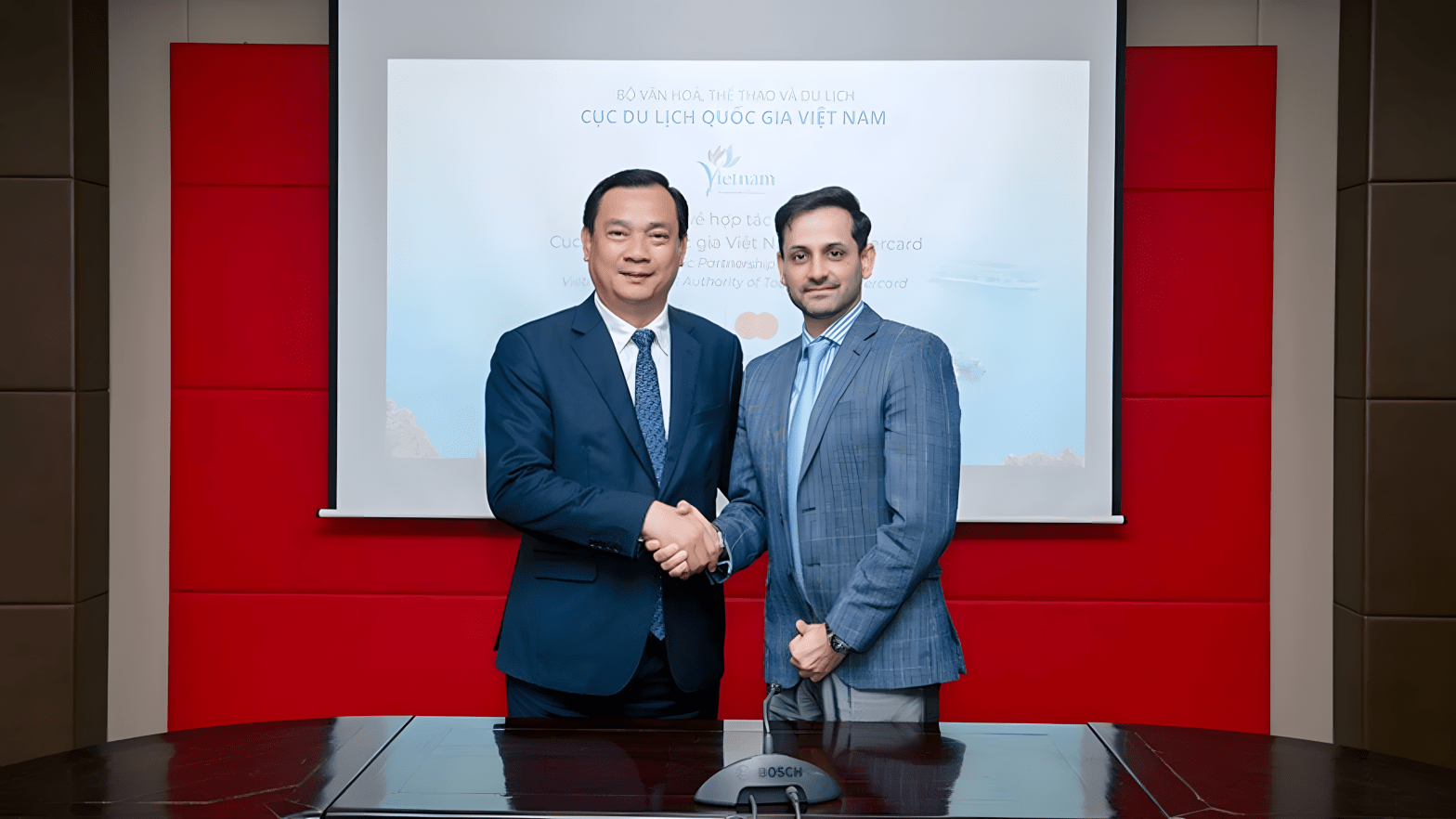
Vietnam, 09 June 2025 – On May 27, 2025, the Vietnam National Authority of Tourism (VNAT) held a working session in Hanoi with representatives from Mastercard to review progress and expand the scope of their strategic partnership. The meeting marked a continued effort to integrate market insights and digital tools into Vietnam’s tourism promotion, aligning with the country’s goal of attracting 22–23 million international visitors this year.
During the session, Mastercard presented a comprehensive overview of international tourism trends and spending behaviors based on aggregated data from its global network. The analysis highlighted travel demand recovery across regions, shifts in spending habits, and destination preferences that have implications for Vietnam’s key source markets.

Representatives from Mastercard emphasized the growing role of data in shaping destination competitiveness. By leveraging transaction insights and travel flows, tourism authorities can tailor marketing campaigns, identify emerging markets, and optimize visitor experiences. The presentation also outlined the potential of personalized content delivery and real-time market feedback, enabling VNAT to make more targeted promotional efforts.
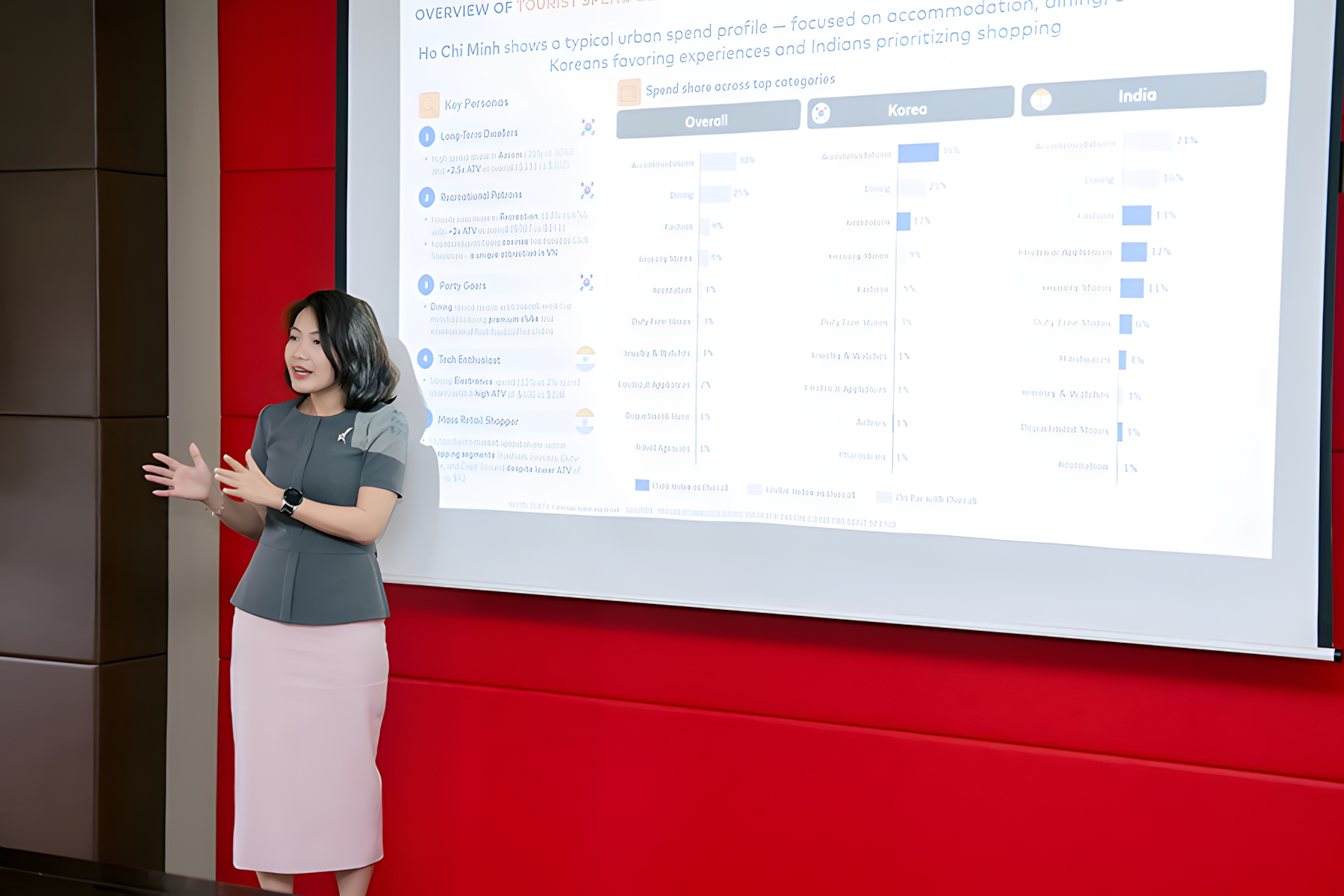
In response, VNAT reaffirmed the importance of using actionable data to inform policy and promotion strategies. Key points of discussion included expanding joint research efforts, developing digital dashboards for market monitoring, and increasing coordination between local tourism offices and Mastercard’s regional teams. Both parties expressed interest in co-developing case studies for top destinations such as Ha Noi, Ho Chi Minh City, Da Nang, and Phu Quoc, focusing on spending patterns, travel motivations, and visitor satisfaction.

VNAT Chairman Nguyen Trung Khanh noted that international visitors not only contribute economically but also influence Vietnam’s global image through their experiences and content shared online. The partnership with Mastercard is expected to support both real-time strategy adjustment and long-term branding.
The session concluded with an agreement to continue strengthening data integration, deepen cooperation across tourism research, and explore opportunities for digital tourism product development. The initiative reflects Vietnam’s broader strategy to enhance tourism resilience through digital transformation and cross-sector collaboration.
With this expanded partnership, Vietnam positions itself to respond more dynamically to market trends while ensuring that promotion efforts are grounded in reliable, data-backed insights.
 Australian Hospitality Alumni Network Vietnam