

Silk Sense Hoi An has been pioneering a green hotel model. Following a carefully planned strategy, the resort has significantly cut down on plastic waste and is progressing towards a zero-waste goal.
Following guidance from local authorities and sticking to 70 specific criteria established by Silk Sense Hoi An, the resort has effectively eliminated plastic waste since September 2023. Ha Thi Dieu Vien, representing Silk Sense Hoi An, outlined three main challenges encountered during this process: engaging employees, collaborating with suppliers, and educating guests.

With 80 percent of the resort’s staff being local residents, persuading them to avoid generating plastic waste was relatively straightforward. Workers also encouraged their families to adopt eco-friendly habits. Additionally, the resort communicated its expectations to suppliers, urging them to comply with waste reduction standards. While guests initially found it challenging to follow the rules, they have since adjusted, refraining from bringing plastic items or ensuring proper disposal if they do.
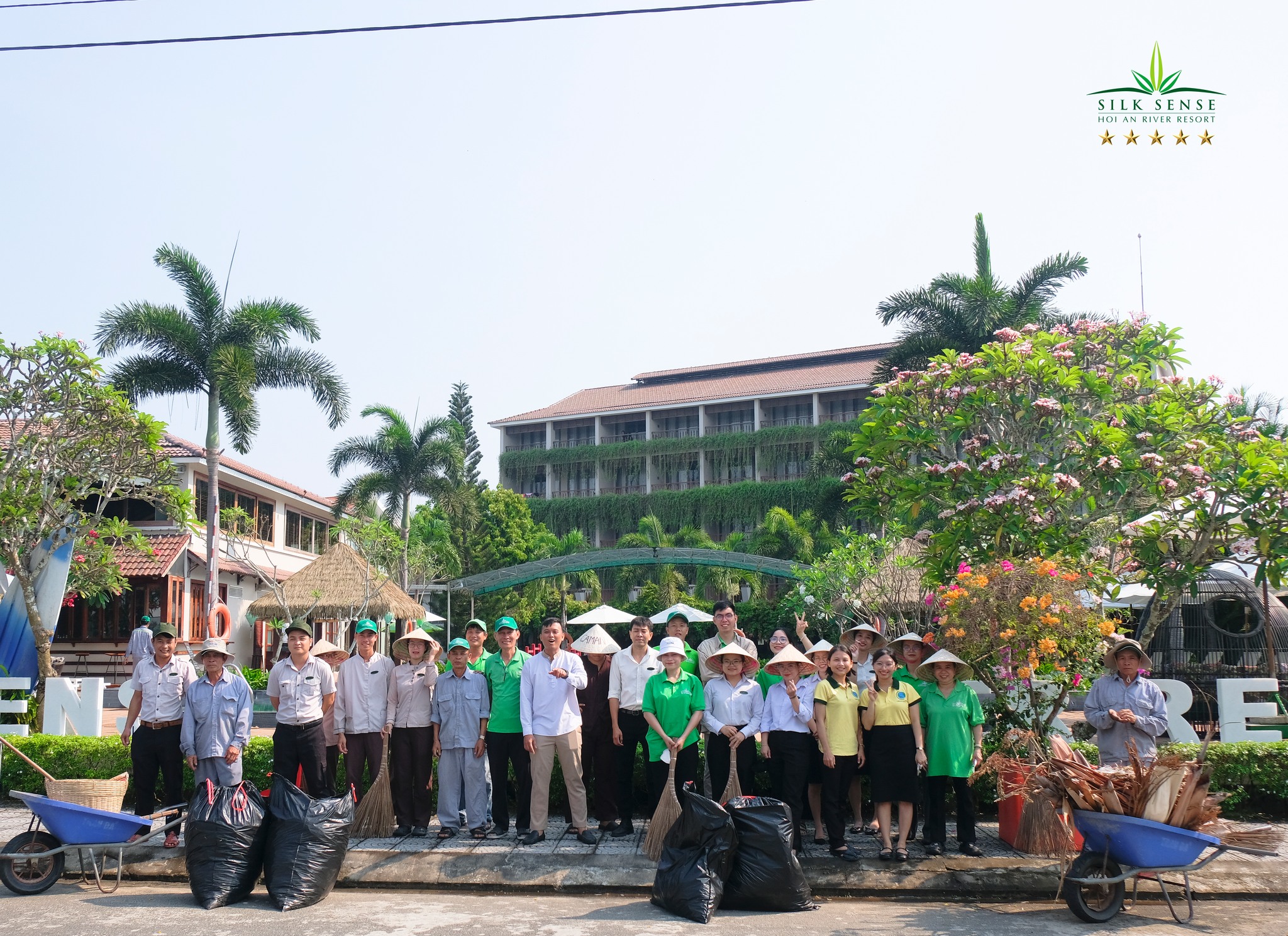
On April 22, 2024, in response to Earth Day—a global initiative aimed at raising awareness and promoting action to safeguard the Earth’s natural environment, the Silk Sense collective united efforts to enhance the cleanliness of the surrounding the resort. Each participant undertook assigned responsibilities with dedication, quickly attending to waste removal while cultivating and creating a refreshing landscape with clean air.
Strictly stick to these measures led to a significant reduction in disposable plastic bottles and overall plastic waste volume. Moreover, guests have responded positively to the eco-friendly atmosphere, enhancing their overall experience. However, transitioning to green tourism is a gradual process requiring patience and collective effort. Currently, only 20 businesses in Hoi An have obtained green tourism certificates, indicating the need for broader community involvement.

Vo Tri Thanh, an advocate for green initiatives, emphasises the importance of sustainable tourism development, citing changing consumer preferences towards environmentally conscious practices. Patrick Harvemann of UNDP underscores the need for green planning, effective destination management, plastic waste reduction, and low-carbon tourism. Thanh notified that all stakeholders, including tourists, businesses, and communities, must actively participate in this endeavour.
Phung Quang Thang of the Vietnam Travel Association acknowledges that green tourism is a long process, requiring collaboration and commitment from all parties involved. However, Nguyen Anh Tuan of the Institute for Tourism Development Research highlights challenges such as limited awareness, inadequate policies, and financial constraints behind green initiatives. Luong Thanh Nam of VietSolutions notes a significant gap between awareness and action, citing financial limitations, particularly exacerbated by the COVID-19 pandemic, as a barrier to green practices.
 Australian Hospitality Alumni Network Vietnam